ELETTO

Journal

Notes on the everyday.

An exploration of leather, care and considered living.

Materials

Understanding leather

What crocodile-embossed calfskin is, why we chose it, and how it changes over time.
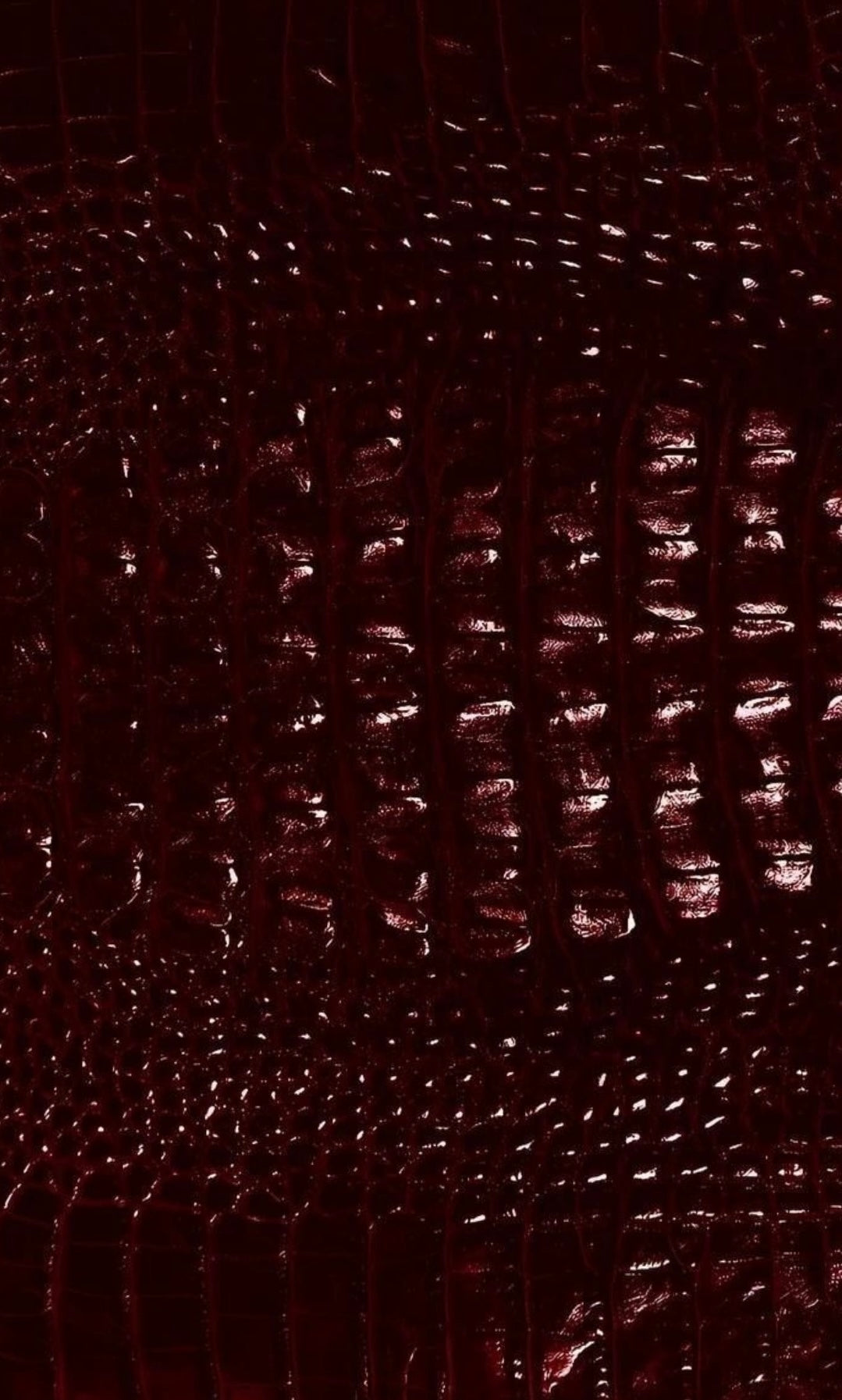
Every leather tells two stories: the material's and the craft's. The second decides whether a piece lasts five years or twenty-five. Calfskin is fine, dense and even; that is why it is the reference for small leather goods, where every millimetre shows.

Our calfskin comes from European tanneries and is embossed with a crocodile pattern: a precise relief, pressed into the grain, that returns the elegance of exotic skin without resorting to it. It is an aesthetic decision, and an ethical one.

Full-grain means the surface has not been sanded to hide marks. What you see is the leather as it is. That is why each piece carries small variations — a tone, a vein — which are not flaws: they are proof the material is real.

With use comes the patina: the sheen settles, the edges round off, the colour gains depth. A leather piece does not spoil over the years. It finishes becoming itself.
Care

Caring for your essentials

Four simple habits so your piece ages well.

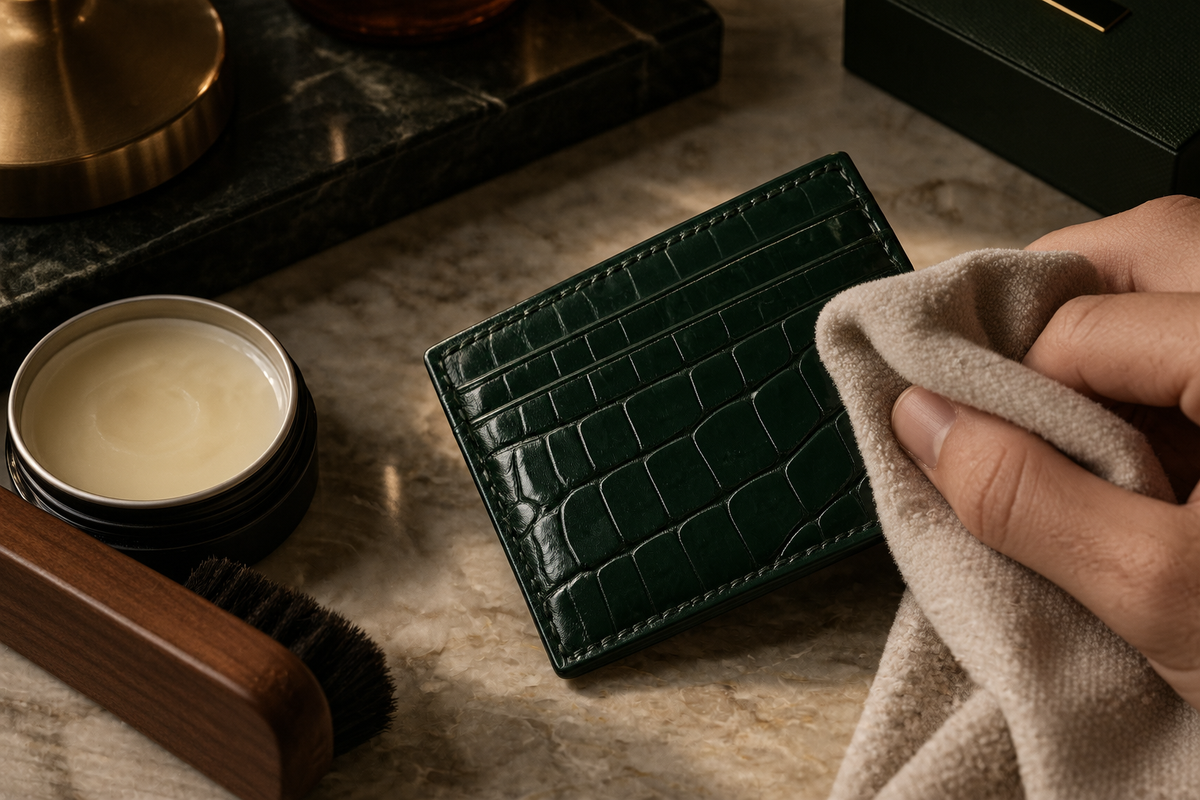
Leather is a living material: it breathes, absorbs and adapts. Caring for it asks for no complicated rituals, only consistency.

  1. Store it with airAvoid airtight drawers and plastic bags. A cotton pouch is enough.
  2. Keep it from direct heatNo radiators, no prolonged sun, no hairdryers. Heat dries and hardens the grain.
  3. Dry without rubbingIf it gets wet, lift the moisture with a soft cloth and let it dry at room temperature.
  4. Condition sparinglyA neutral balm two or three times a year. Always test on a discreet area first.

And above all: use it. Leather that lives in a drawer dries out; leather that goes with you gains character.

Personalization

Choosing your engraving

Initials, a name or a word: how to decide what you will carry engraved.

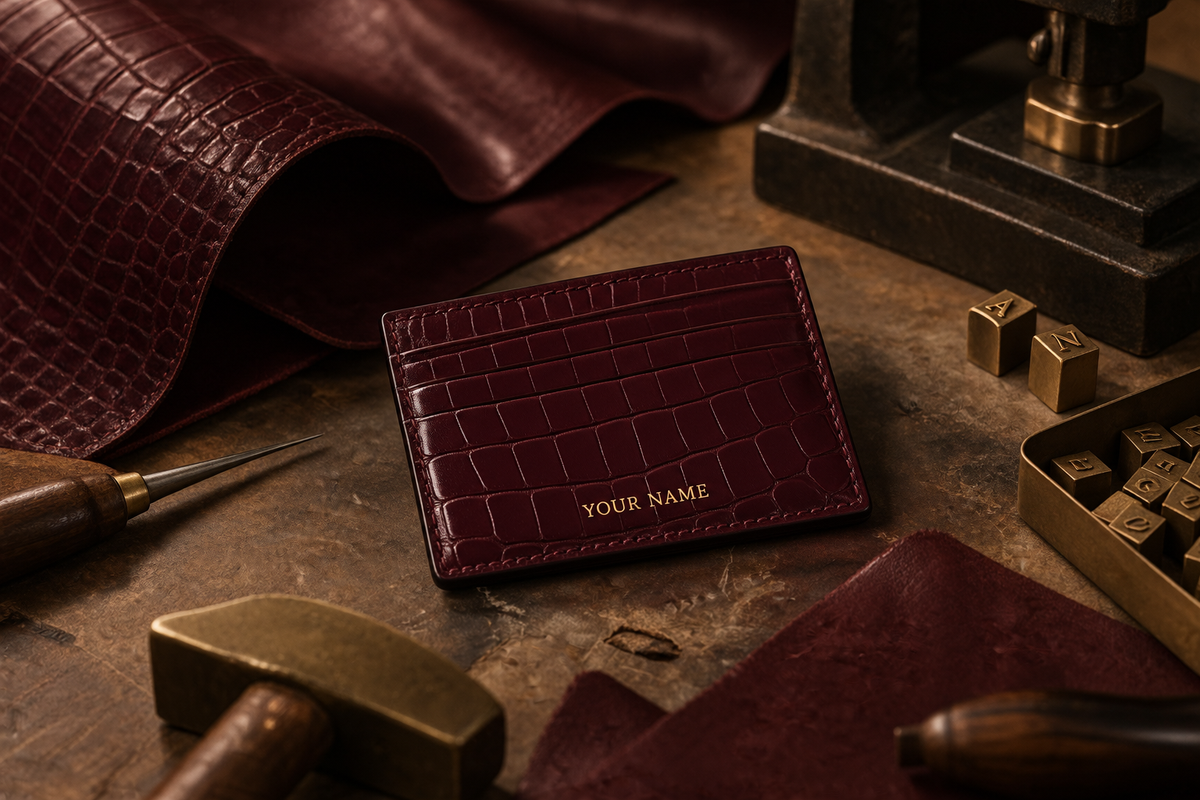
The engraving is the most personal part of a piece and, for that reason, the most considered. There is no right answer, but there are three routes that almost always work.

Initials are the classic choice: two or three letters, discreet, recognisable up close and invisible from afar. A full name works when the piece is a gift and you want no doubt about it. And a word — a date, a city, something only two people understand — turns the object into a memory.

As for the finish: gold brings warmth and contrasts against darker tones; silver is cooler and quieter, and works especially well on lighter leathers. Both are applied with the same relief.

One last piece of advice: read your text carefully before confirming. An engraved piece is unique, and that means it cannot be changed.

Explore personalization